 Back in April, I wrote about the first legs of my solo trip to Southern Italy- Rome to Naples, then on to Pompeii.

The next section of my trip was just wonderful. From Pompeii, I caught a small regional train to Salerno, and from there a bus to Amalfi. While on the train I found myself a cute little hotel from my phone (trying to be spontaneous, remember?). The bus ride to Amalfi was like a roller coaster- it reminded me of an Italian version of Thunder Mountain Railroad in Disney World. The entire hour was spent making hairpin turns along sheer cliffs, and ducking through tunnels that were truly holes in a mountain. The barriers preventing us from plunging into the Mediterranean Sea looked like they were only a foot tall! At one point along the drive, I spotted two men fishing off the cliff- their lines had to be hundreds of feet long to reach the water!!


Finally arriving in Amalfi was a relief.
It was still early enough in the evening to easily find my hotel and explore before dinner. Eating alone is one of the more awkward parts of traveling alone. I usually bring a book or a notebook in case I can't handle the silence or feel too uncomfortable, but I'm pushing myself to become more comfortable with the quiet. One great part is that when you're traveling alone, people stop to talk for longer. In both Italy and Croatia, local waiters and taxi drivers gave me tons of insight into the history and culture of an area, I think because my being alone freed them up to share a little more.


 The next morning I booked a boat ride over to Positano to explore a little more of La Costiera Amalfiata (what Italians call the Amalfi Coast).

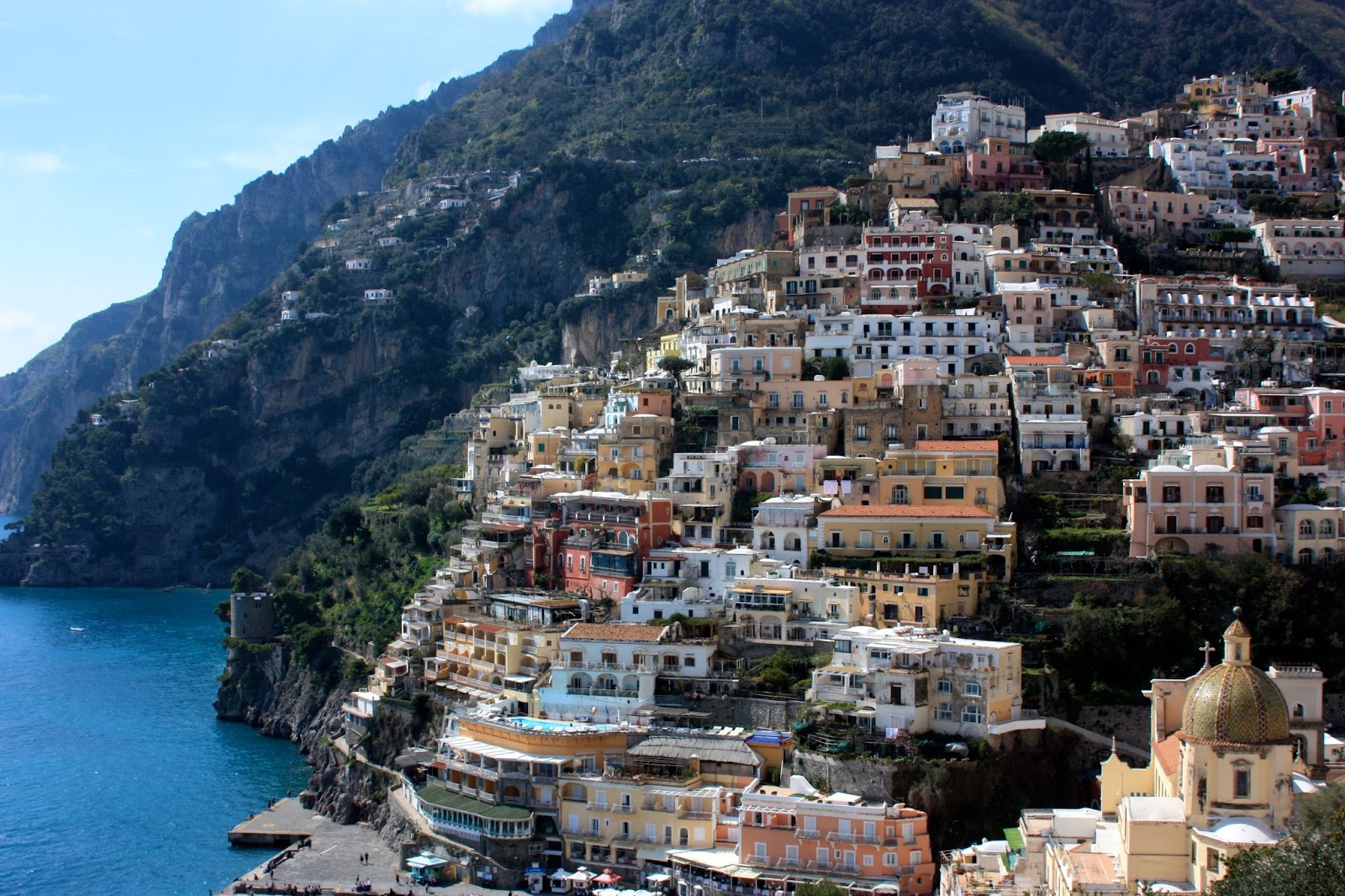
The ride blew my mind, and made it very clear why the coast is a UNESCO World Heritage Site. Houses were built right into cliffs and mountainsides- how did they do that?! What made those Middle-Ages-ers think to themselves, "Yes, this cliff blocked off by a mountain is a perfect spot for my house!" Regardless of what kind of crazy thoughts they were having, the result is breathtaking. While the view from the bus was amazing, the Amalfi Coast needs to be seen from the sea to be appreciated in all its glory.


The water was a dark, stormy blue, unlike the turquoise seas I had seen in Sardinia and in pictures of the coast. That didn't stop little kids from running up to it to toss rocks from the beach, or brave bathers to wade in up to their knees! One amazing moment was spotting a few dolphins leaping out of the sea. This was one of the few moments were I wished I wasn't alone. It was so exciting and I wanted to share it with someone, so I tapped the girls sitting in front of me to point them out, and they looked at me like I was nuts. Humph. Their crabbiness meant they didn't get to see dolphins, though, so ha!


I loved walking through Positano and exploring a second little town, though there were some clear distinctions between the two. Positano was a little fancier; restaurants were more expensive, and there were more tourists. John Steinbeck put it well when he wrote:
Positano bites deep. It is a dream place that isn't quite real when you are there and becomes beckoningly real after you have gone.
 The entire city seems to be stairs and hills. You climb up from the port to the city, then you climb to the restaurants, the churches, the shops, and then you keep climbing for the views. White linen dresses and colorful jewelry call out from the shops, but I could never tell if they were tacky or stunning. I did pass one store a few times, thinking it was going to be too cutesy for me, with little sewn fish and hearts hanging outside, but when I finally went in, I was completely obsessed and ended up buying a ton- a beautiful vase and cute placemats for me, along with a few gifts. The seaside town is also known for its limoncello. There were a few shops full of lemon products that smelled absolutely heavenly- I can still smell it now when I think about it! I went on both my first and second days; the first was bright, sunny, and cheerful, while the second was a day of torrential downpour. Honestly, they were both stunning in their own way.


I walked as far up into the hills as I could and was not disappointed by the views- they were so incredible, they took my breath away.
Both Amalfi and Positano were touristy, but some guys I had met on the train between Pompeii and Salerno told me that their home island (Capri) was so small that everyone knew everyone else. But once Easter hit, thousands of tourists descended on the island. I had heard the same in Cinque Terre, and knew it was the same along the Amalfi Coast. Because it was just Easter the week I was visiting, it wasn't quite so busy; the mornings were quiet, with busy and crowded afternoons. However, leaving the main streets was a good way to avoid the crowds. Once I headed up behind the churches, the streets were quiet, narrow, and cool. Locals traveled through these teeny streets, wishing each other, "Buona Pasqua," and, "Aguri" (Happy Easter and Best Wishes- they use "aguri" for everything here).


Coming back was as crazy of an adventure as my trip down.
Two days before I wanted to come back, I started looking at train tickets. Well, every single ticket at every single time available back north was sold out. Tickets from Salerno, Naples, and Sorrento leading to Milan, Rome, or any other city were sold! I looked in to boats, planes, busses, everything I could think of. Eventually, the man who owned the tiny little hotel I was staying in helped me out, sitting down next to me at the huge, ancient computer he did his business on. Seriously, I think we had the same one in the early 90s. He called around, and eventually we found a trip. I took a 5:15am bus to Salerno to catch a train to Florence, spent an hour in Florence before getting another train to Bologna, stayed in Bologna for a few hours, and then finally on to Milan. Oh my gosh, it was crazy. The most frustrating part was that every train I was on had a final destination of Milan, but they were full, so I couldn't stay on! That's what I get for wanting to be spontaneous! Another wonderful, slightly uncomfortable, adventure.






 Posts
Posts


